
From MetaCause to Generative AI for FMEA



Leading the Future of FMEA
Powered by the published Prompt0–5 framework — 30 years of research transformed into the first Generative AI FMEA system, delivering capabilities the industry is only now beginning to adopt.
Making Process Data Easy to Use
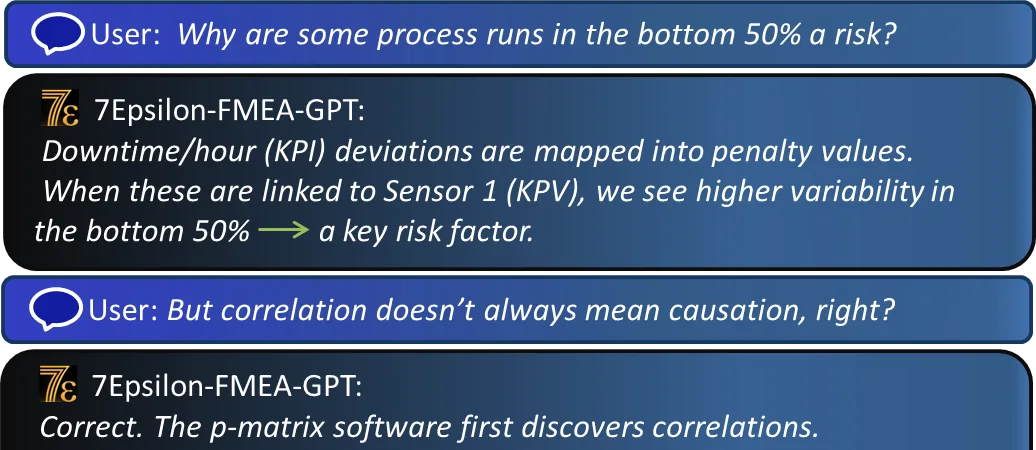
Penalty Matrix maps deviations from expected KPIs into penalty values, revealing hidden risks.


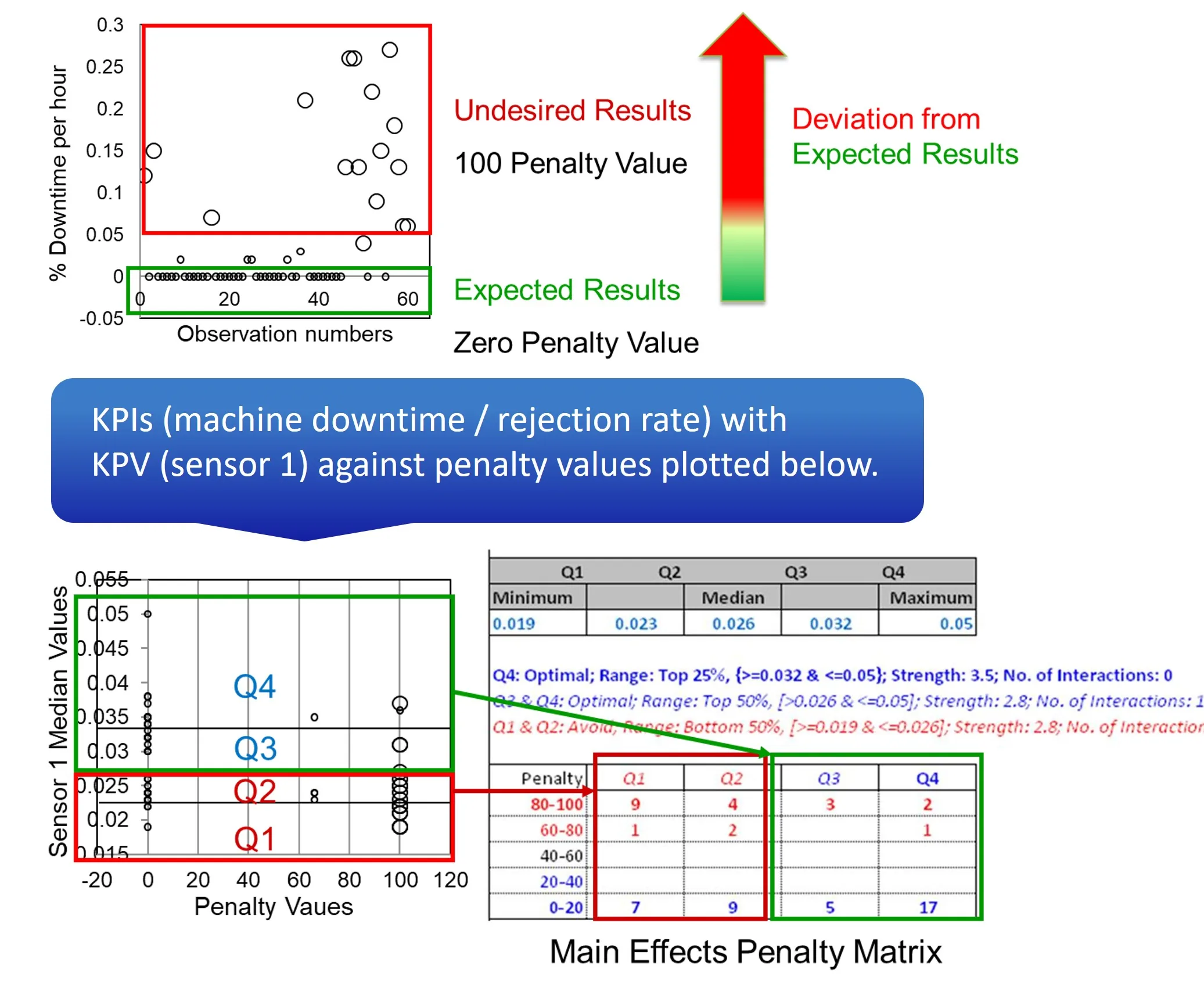
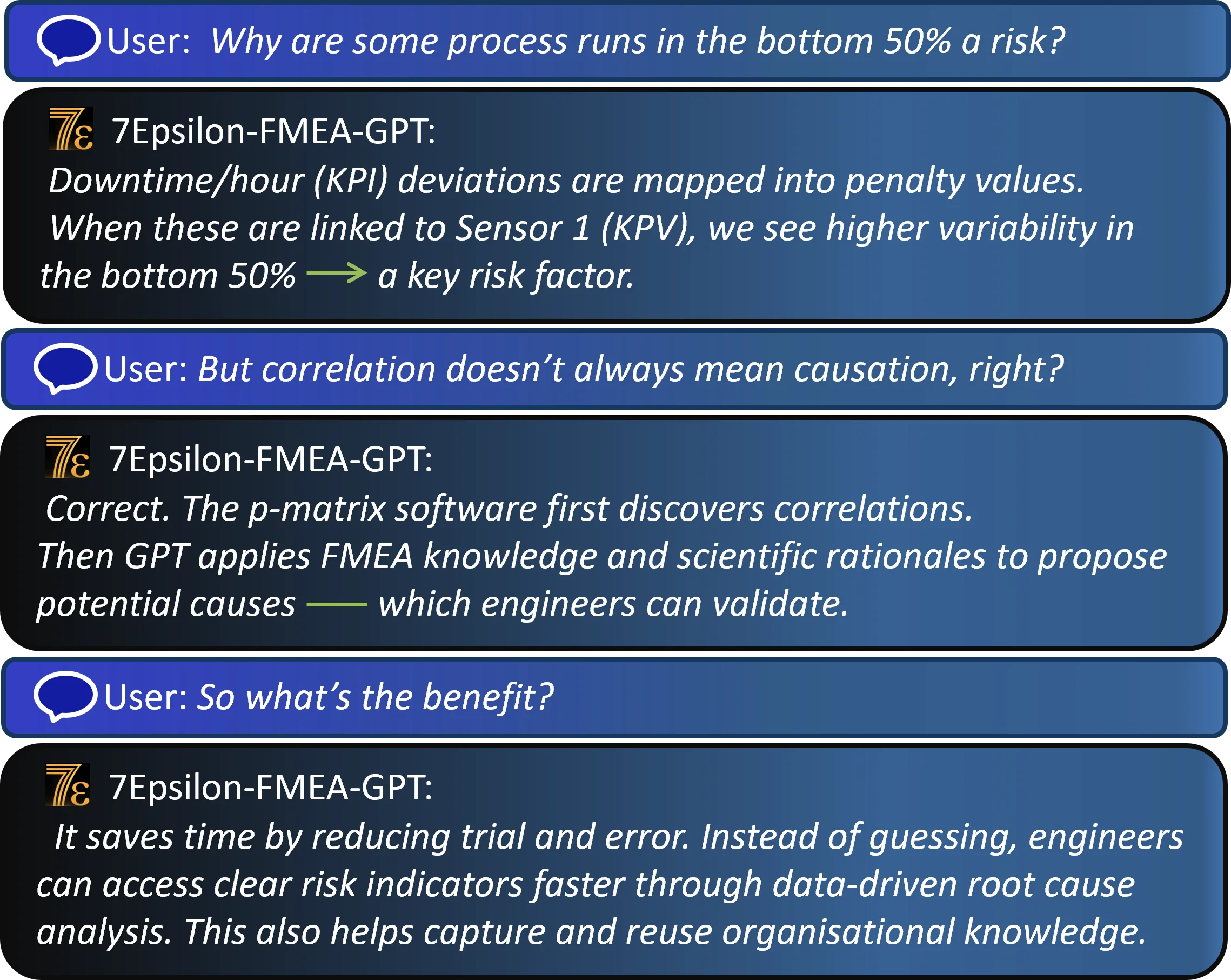
7Epsilon-FMEA-GPT reasoning
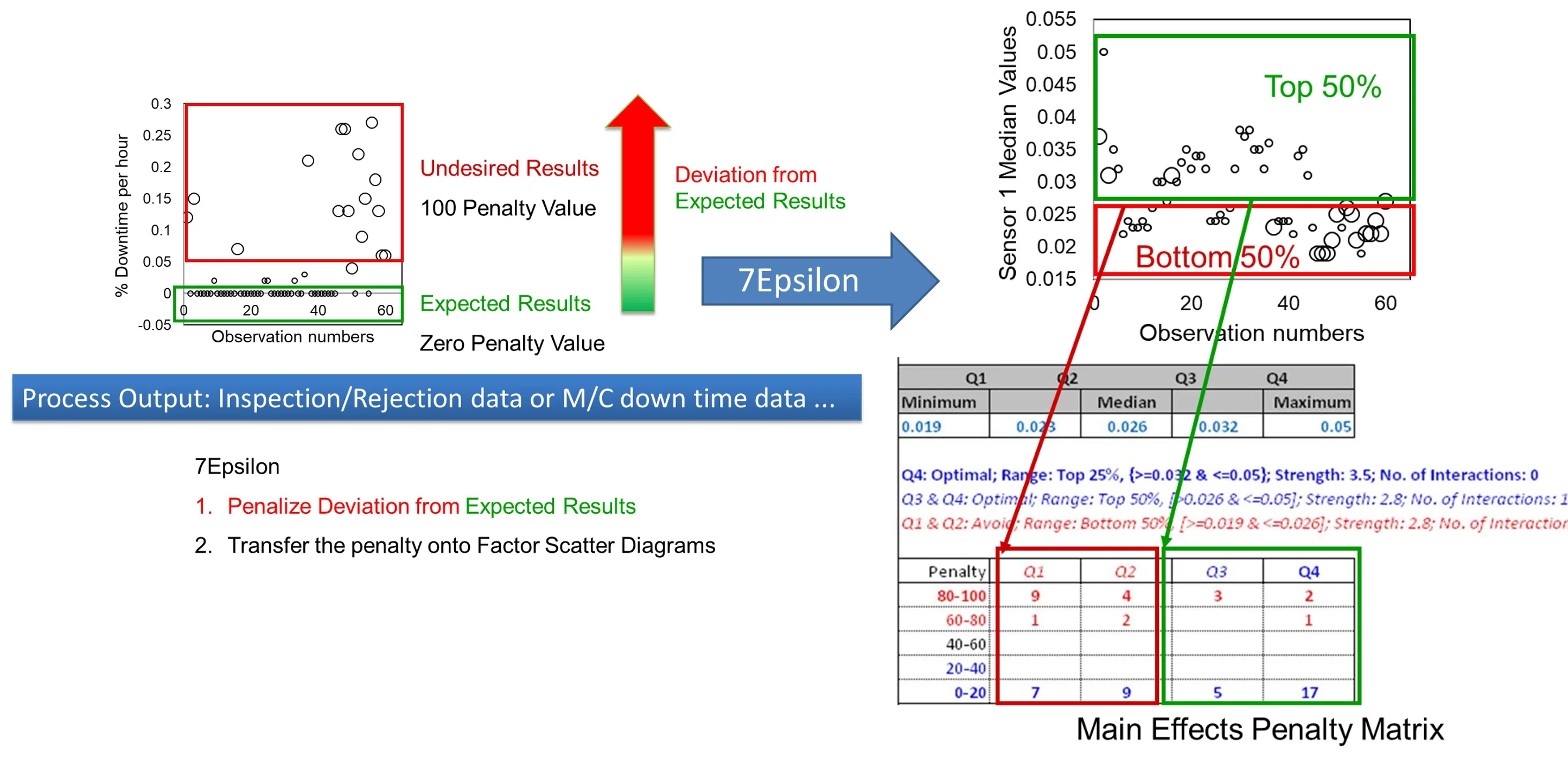
7Epsilon-FMEA-GPT translates penalty insights into root-cause reasoning with scientific rationales.


Why 7Epsilon is Different?

Penalty Matrices
Visualise main effects and interactions with penalty matrices. They map performance deviations to key variables, highlight optimal/avoid regions, and compare with binary interactions for deeper insights.


Generative Reasoning
AI-generated FMEA rationales explain links between causes, failures, and controls. Helps engineers connect process data with structured FMEA knowledge.

Knowledge Capture
Capture lessons learnt in FMEAs and reuse them as organisational knowledge. Ensures improvements and insights are not lost over time.

Time-Based Insights
Convert timestamps into factors such as hour, shift, weekday, or month. Reveal when process risks and deviations occur most often.

Mixed data analysis
Analyse categorical and continuous factors together in one framework, even with missing data. Provides robust correlations across diverse inputs.

Root Cause Analysis
A Day in the Life with 7Epsilon-FMEA-GPT
Before: Teams lost days in spreadsheets, copy-paste, and guesswork.
After: With 7Epsilon-FMEA-GPT, the same PFMEA insights are ready within hours — AI prompts combine penalty matrices and process-science rationales to cut through noise and confirm causes.
Faster reviews, fewer defects, better mornings.


Get updates on AI-FMEA+ insights
Designed for Managers, Engineers, and Teams.
Each role gains unique insights from p-matrix and AI-driven FMEA.
Managers
Reduce downtime and scrap by spotting process risks early.

Engineers
Diagnose root causes faster with penalty matrices and AI-driven rationales.

Teams
Capture lessons learned and reuse them across projects.
Recognition & Invited Talks
From published Swansea University research and industry fellowships to innovation awards and invited talks worldwide, our work has been consistently recognised for its impact in manufacturing and trusted by leading organisations.


“Early recognition for digital manufacturing innovation and knowledge-driven quality improvement.”
This fellowship bridged academia and industry, laying the foundation for the 5-prompt FMEA framework, presented at ICCSM24 (Cape Town) and now under review for publication.
Decades of research on casting defects and knowledge engineering, published via Swansea University, now underpins a Generative AI FMEA system unifying risk, root cause, and knowledge.
Invited talks at ICFFT, NCTS, ICAM 25, IIT-BHU Centenary, Belarus Foundry Congress, Royal Academy of Engineering (UK) , among others.
Elected Fellow of the Institute of Cast Metals Engineers, contributing to the development and delivery of technical courses advancing foundry practice.
As an EICF member, Swansea University produces published research that informs AI-driven FMEA developments. All commercial activities are conducted by p-matrix Ltd.
First introduced at NCTS India (2012) with supporting YouTube tutorials. Since then, expanded through keynote lectures and global AI+FMEA training workshops, including ICCSM24 (South Africa, RAEng-linked), with future sessions planned for Nigeria (2026) and ICCSM26.
Peer-reviewed publications on defect diagnosis, metacauses, and knowledge engineering have informed industrial practice worldwide and underpin the development of AI-driven FMEA.