
Our Story
From MetaCause in 1995 to Generative AI FMEA in 2025 — a 30-year journey of science, resilience, and innovation at Swansea University, strengthened in recent years through the support of the Royal Academy of Engineering and the Welsh Government.

A great story starts with a bold idea
The MetaCause concept, published in 1995, introduced defects → meta-causes → root causes with Bayesian reasoning. This research laid the foundation for today’s Generative AI FMEA.
The milestones that shaped our journey
From the first MetaCause spark to Generative AI FMEA, every step built on science, persistence, and global collaboration.
Foundations (1990–1992)
🌱 At the Indian Institute of Science (IISc) Bangalore, Rajesh S. Ransing developed the first MetaCause concept under Prof. M. N. Srinivasan. Supported by Prof. Roland W. Lewis’s vision, Rajesh moved to Swansea University with an ORS award and fully funded bursary — beginning 30 years of root-cause analysis research

ICADA (1995)
📖 Rajesh S. Ransing’s PhD (Swansea University) formalised the MetaCause concept into a Bayesian diagnostic system for castings.
Published in Journal of Intelligent Manufacturing, this was decades ahead — embedding defects → meta-causes → root causes.

Patent & Award (2002–08)
🏆 Dr. Rajesh S. Ransing, Dr. Meghana Ransing, and Prof. Roland W. Lewis co-invented a patented diagnostic AI system for manufacturing (US7440928).
The research was funded by EPSRC grant GR/R89912/01 (with Rolls Royce, 2002–05: Learning cause-and-effect relationships from examples – the finite element way) and by the Welsh Government (HE09 COL1014, 2006).
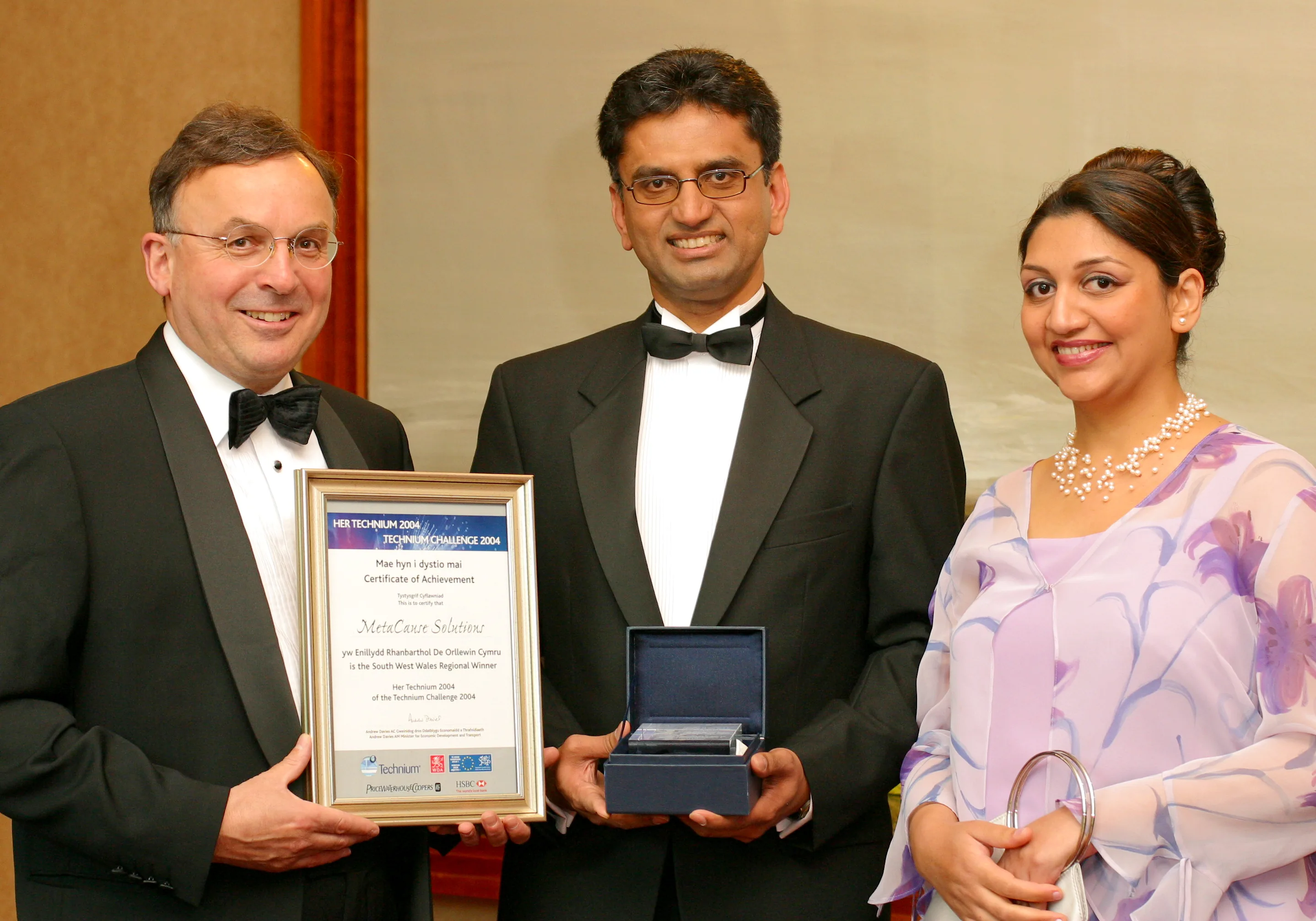
This work led to MetaCause Solutions Ltd, which went on to win the First Technium Challenge Business Plan Competition (award presented by Welsh Minister Andrew Davies).

7Epsilon Launch (2012)
⚙️ p-matrix Ltd, founded independently of MetaCause, introduced the penalty matrix approach supported by peer-reviewed Swansea University research (Ransing et al., 2013; Giannetti et al., 2014; Batbooti & Ransing, 2016).
The first 7Epsilon workshops were launched worldwide — establishing a new zero-defect methodology built on data, knowledge reuse, and innovation culture.

RAEng Fellowship (2016–17)
🎓 Dr. Rajesh S. Ransing awarded the Royal Academy of Engineering Industry Fellowship.
This embedded 7Epsilon and FMEA into real-world industrial practice, strengthening the bridge between academia and manufacturing.

RAEng TSP Project (2022–24)
🌍 UK–South Africa collaboration co-develops the Prompt0–5 framework for Generative FMEA. Funded by RAEng TSP1255 & Welsh Smart Partnership Project. Findings were presented at ICSSM 2024 in Cape Town and are being published in a special issue of the African Journal of Science, Technology, Innovation and Development.

Generative AI FMEA (2025)
🤖 7Epsilon-FMEA-GPT launched. Built as part of Philip Pe’s PhD on knowledge graphs: first system to combine PS/PWE functions, scientific rationales, and Prompt-guided 5 Whys for PFMEA/DFMEA.
Our Journey in Pictures
From India to Swansea, from MetaCause to Generative AI FMEA — these moments capture how research, collaboration, and persistence shaped three decades of innovation. Each photo tells part of the story: ideas becoming patents, startups winning awards, workshops inspiring industry, and global partnerships creating 7Epsilon-FMEA-GPT.

1990 - 1992 — Seeds of MetaCause
Professor M. N. Srinivasan — a renowned foundry consultant and diagnostic expert — mentored Rajesh Ransing during his master’s at IISc Bangalore in the early 1990s. At a time when AI was still rule-based and FMEAs were just paper checklists, he posed a simple but radical question:
👉 If doctors learn as much from the absence of symptoms as from their presence, why couldn’t computers do the same with defects and stable runs?
This challenge planted the seed of MetaCauses — scientific rationales linking root causes and defects — decades before AI or FMEA tools could capture such insights.

1992 — Swansea Move
Professor Roland W. Lewis — a Fellow of the Royal Academy of Engineering and a world authority on Finite Element Methods — visited IIT Madras and IISc Bangalore in 1992.
Sharing his expertise in numerical modelling and casting simulation, he asked another bold question:
👉 if computers can predict physical behaviour, why not also diagnose process behaviour?
Where others saw risk, he saw potential. His vision encouraged Rajesh Ransing to move to Swansea University for a PhD, fully funded by the Overseas Research Students (ORS) Award Scheme and a Swansea University bursary.
Without his mentorship and unwavering support, the 30-year research journey that followed would not have been possible.
1995 — ICADA Published
Rajesh Ransing’s PhD at Swansea University formalised the MetaCause concept into Bayesian diagnostics for castings. Published in the Journal of Intelligent Manufacturing, the ICADA paper was decades ahead — embedding defects → meta-causes → root causes.

2002-2008 — Patent & Award
Dr. Meghana Ransing’s PhD led to a granted US/EU patent (US7440928) for diagnostic AI in manufacturing, co-invented with Dr. Rajesh Ransing and Prof. Roland W. Lewis. The research was funded by EPSRC grant GR/R89912/01 (with Rolls Royce, 2002–05: Learning cause-and-effect relationships from examples – the finite element way) and by Welsh Government grant HE09 COL1014 (2006). This work gave rise to MetaCause Solutions Ltd, which became regional winner of the First Technium Challenge Business Plan Competition (award presented by Welsh Minister for Economic Development, Andrew Davies).
Applications to medicine were also explored through the EPSRC project EP/F059116/1 (2008–09).
2012 — 7Epsilon Launch
p-matrix Ltd, founded independently of MetaCause, introduced the penalty matrix approach backed by a series of peer-reviewed Swansea University papers (2013–2017). The first 7Epsilon workshops were launched worldwide — establishing a new zero-defect methodology built on data, knowledge reuse, and innovation culture.
Unlike traditional methods, penalty matrices treat stable runs and defective runs as equally informative. Stable runs highlight safe operating windows, while defective runs highlight risk zones. By overlaying both, engineers gain a knowledge map of process behaviour.


2016–2025 — RAEng Fellowship & Celebration
Dr. Rajesh Ransing awarded the Royal Academy of Engineering Industry Fellowship (2016–17), embedding 7Epsilon into turbocharger and foundry quality improvement projects (presentation viewed over 12,000 times).
In February 2025, he was invited back to RAEng to celebrate the 10-year anniversary of the TSP programme — recognising the long-term impact of this research.

2022–2024 — RAEng TSP Project
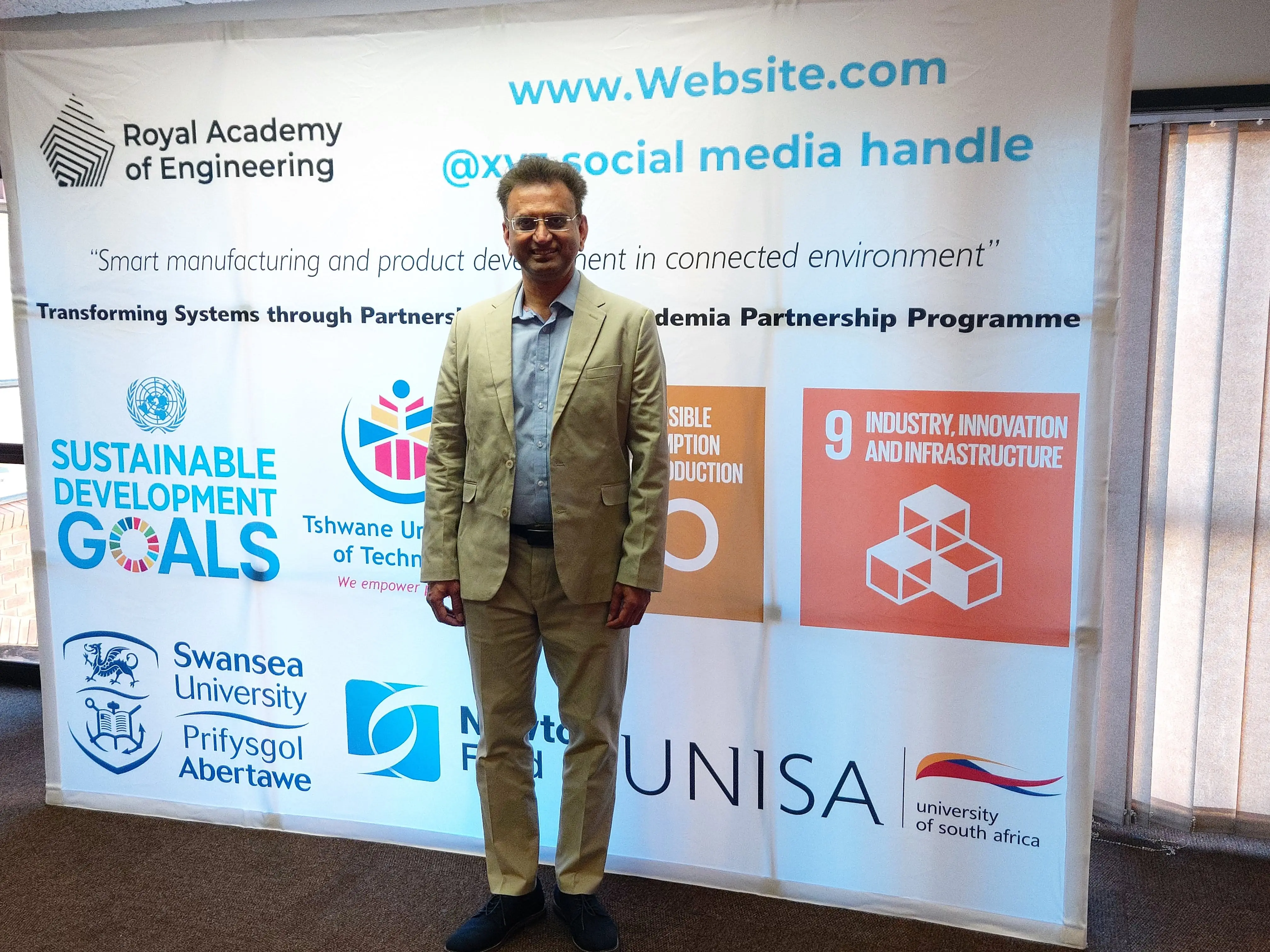
The UK–South Africa collaboration developed the Prompt0–5 framework for Generative AI FMEA, funded by RAEng TSP1255 and the Welsh Smart Partnership (2021/11/09/SP/048) project. Dr. Grace Kanakana-Katumba (TUT, South Africa), Dr. Rajesh Ransing (Swansea University), and Dr. Meghana Ransing (p-matrix Ltd) have been updating RAEng on project progress. Our Prompt0–5 framework was presented at ICSSM 2024 and will appear in a special issue of the African Journal of Science, Technology, Innovation and Development.
2025 — 7Epsilon-FMEA-GPT Launch
The launch of 7Epsilon-FMEA-GPT marks the milestone of a 30-year journey — from the first MetaCause paper in 1995 to 2025. Written by Philip Pe, co-founder of p-matrix Ltd and PhD researcher at Swansea University, the software consolidates decades of applied research. Built on the published Prompt0–5 framework, 7Epsilon-FMEA-GPT is the first system to combine Penalty Matrices, Process–Science explanations, and AI-guided 5 Whys for PFMEA/DFMEA.
What began with engineering diagnosis now opens a pathway that could one day extend into medicine and other domains where systematic cause-and-effect reasoning is key.
Browse open opportunties
Leadership and partners driving innovation
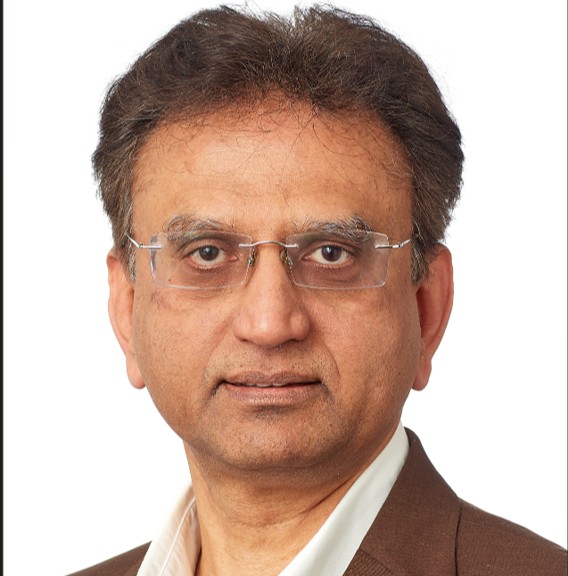
7Epsilon is built on collaboration. Our leadership team, together with research collaborators and enabler partners, work across industry and academia to deliver explainable AI, dynamic FMEAs, and digital solutions for zero-defect manufacturing.

Frequently Asked Questions
Here’s what most partners and companies ask us.
Do you offer free trial?
Yes. You can try 7Epsilon-FMEA-GPT with your own OpenAI account before joining as a partner.
How do I get started?
Choose the pathway that fits you best: Pilot Partner (apply 7Epsilon in your plant), Enabler Partner (deliver pilots & training), or Academic Sponsorship (fund student research). Use the “Contact Us” button to connect.
How does 7Epsilon save costs?
Early pilots show 20–30% scrap reduction and 40–50% faster investigations. That means less rework, fewer trial-and-error experiments, and lower engineering costs.
What industries can benefit?
7Epsilon is designed for manufacturing sectors such as foundries, automotive, aerospace, and industrial machinery — but it can be applied more widely.
Do I need Microsoft to use 7Epsilon?
No. You can start with an OpenAI Team licence. For enterprise pilots, 7Epsilon integrates inside Microsoft Teams, SharePoint, and Power Automate for secure deployment.
Can we access Dr Rajesh Ransing's expertise?
Yes. You can sponsor Swansea University projects (MSc, MSc-by-Research, or PhD) supervised by Dr Rajesh Ransing, with optional ZI co-supervisors for advanced topics. This provides tailored research and access to future talent.
Who supports pilots and projects?
Pilots are delivered with p-matrix Ltd. Academic projects are supervised by Dr Rajesh Ransing with support from the Zienkiewicz Institute where relevant.